A Thing is Ditto’s core entity. It represents any asset you want to manage as a digital twin – a physical device, a virtual grouping, or any concept you can model as structured data.
What is a Thing?
A Thing is a generic container that acts as a handle for all the data related to one asset. You decide what a Thing represents:
- Physical device – a sensor, a lamp, a vehicle, a lawn mower
- Virtual device – a room in a building, a virtual power plant, weather data for a location
- Transactional entity – a vehicle trip from start to stop, a series of machine measurements
- Master data entity – a device supplier, a service provider, a geographic region
- Anything else that fits the data model
Thing structure
Thing ID
Every Thing has a unique identifier that follows the namespaced ID
format: <namespace>:<name>. For example: com.example:temperature-sensor-42.
Policy reference
Each Thing links to a Policy via its policyId. The
Policy defines which
authenticated subjects may read and write the Thing – down to individual attributes and feature
properties.
Definition
A Thing can include a definition that links it to a model describing its capabilities. The
definition can be:
- A valid HTTP(s) URL – for example pointing to a WoT (Web of Things) Thing Model
- A reference using the syntax
<namespace>:<name>:<version>– for exampleorg.eclipse.ditto:HeatingDevice:2.1.0
Attributes
Attributes store static metadata about the Thing as a JSON object. Use them for data that does not change frequently – manufacturer, serial number, installation location. You can nest values to any depth:
{
  "manufacturer": "ACME corp",
  "location": {
    "building": "HQ",
    "floor": 3,
    "room": "Lab-A"
  }
}
Features
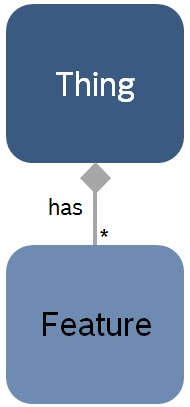
A Thing can contain any number of Features. Each Feature groups related dynamic state data (sensor readings, configuration, operational status) under a named identifier.
Metadata
A Thing can carry additional metadata attached to any of its attributes or feature properties – for example, timestamps recording when values last changed or units of measurement.
Model specification
Example
{
  "thingId": "the.namespace:theName",
  "policyId": "the.namespace:thePolicyName",
  "definition": "org.eclipse.ditto:HeatingDevice:2.1.0",
  "attributes": {
    "someAttr": 32,
    "manufacturer": "ACME corp"
  },
  "features": {
    "heating-no1": {
      "properties": {
        "connected": true,
        "complexProperty": {
          "street": "my street",
          "house no": 42
        }
      },
      "desiredProperties": {
        "connected": false
      }
    },
    "switchable": {
      "definition": [ "org.eclipse.ditto:Switcher:1.0.0" ],
      "properties": {
        "on": true,
        "lastToggled": "2017-11-15T18:21Z"
      }
    }
  }
}
Further reading
- Features – properties, desired properties, and definitions
- Policies – access control for Things
- Namespaces & Names – ID format and naming rules
- Metadata – attach contextual information to Thing data